
Hydrogel dressings: benefits and applicability for wound healing
By: Tracey Aldis
Essentials
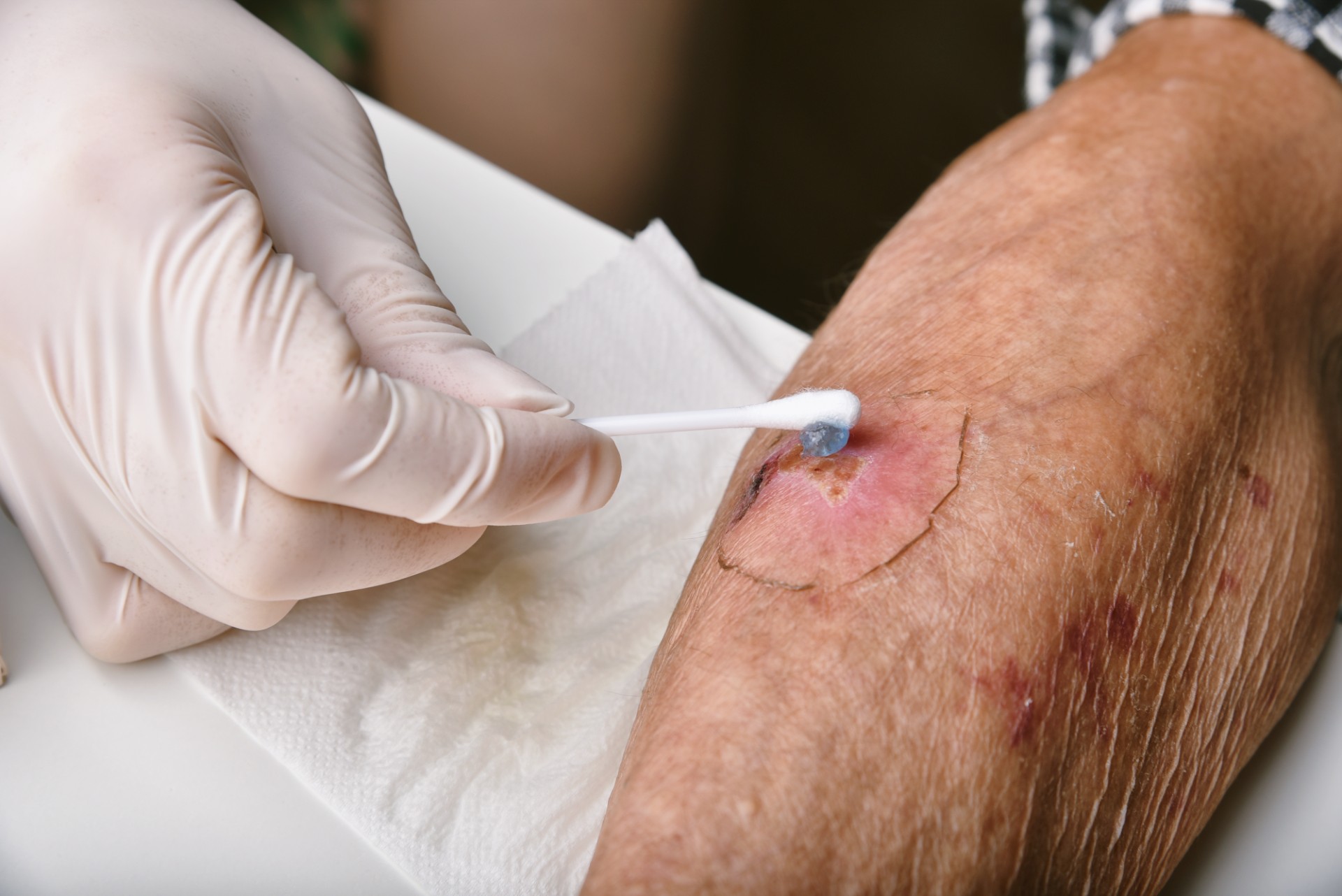
Hydrogel dressings have become a central component of contemporary wound management, providing specific restoration of moisture balance to promote healing. In wounds that require hydration or debridement, hydrogel dressings are highly recommended5.
Clinicians may find dressing classification challenging, as many modern products combine modes of action, evading singular categorisation. Hydrocolloids are occlusive dressings containing hydrophilic particles which gel upon contact with exudate. Similarly, alginates (gelling fibres) form a gel on absorption of wound fluid. Hydrogels differ in composition and absorption – they are pre-formed, water-rich gels designed to donate moisture and have low capacity for absorption2.
The role of hydrogels in moist wound healing
Moisture balance is a fundamental consideration in current best-practice wound care. Maintaining optimal levels of moisture in the wound bed promotes granulation and epithelialisation, thus reducing time to heal and improving quality of life5. Dry or desiccated wounds are more painful and slower to heal. Because hydrogels are non-adherent, dressing changes are less traumatic and patient comfort is improved6.
Hydrogel dressings are 90% water contained in a hydrophilic polymer gel composed of synthetic or natural ingredients. Products that combine both natural and synthetic polymers demonstrate higher efficacy for wound healing6. Their structure is three dimensional, making them ideal for filling dead space and protecting irregularly shaped wounds4. Hydrogel dressings are designed to donate moisture to dry wound beds, while being non-adherent and conformable. They are available in various forms: sheets, impregnated gauze or gels. Some products contain antimicrobials to combat infection11. Hydrogel dressings have limited absorptive capacity, making them unsuitable for wounds with moderate to heavy exudate levels8.
Hydrogels are biodegradable and biocompatible, allowing them to mimic the extracellular matrix (ECM) and its functions in supporting the healing process6. Their biocompatibility also reduces the risk of allergic reactions in sensitive individuals4. Hydrogel dressings may contain agents like hyaluronic acid or collagen to boost the production and deposition of the ECM6. They are an ideal medium for the delivery of bioactive agents and controlled release drugs. Emerging “smart” hydrogels incorporate sensors to detect changes in wound pH, temperature, or reactive oxygen species (ROS), enabling real-time monitoring of the wound environment and delivery of embedded drugs1.
Promoting autolytic debridement
Debridement is a key component of wound bed preparation. When sharp debridement is not appropriate, hydrogels can be used to support autolytic debridement by donating moisture to devitalised tissue. This enhances the action of natural enzymes that soften necrotic tissue, gradually separating it from the wound bed. Although autolytic debridement can be slow, it is safe because only devitalised tissue is broken down. It is also less painful than mechanical or sharp debridement and can be undertaken by generalist clinicians. As autolytic debridement is a continuous process, it also disrupts biofilm persistently. This increases the efficacy of topical antimicrobial agents that may be incorporated in hydrogel products8.
Indications: When to use hydrogel dressings
Hydrogel dressings can reduce wound related pain in several ways. On application they provide a cooling effect, particularly in wounds with exposed nerve endings. Their non-adherent properties support atraumatic dressing changes, which in turn promotes better treatment adherence and reduce healing time8. In addition to maintaining hydration, hydrogels facilitate gas exchange and thermal insulation1.
Hydrogels are an excellent choice for treating burns, especially as first aid10. Their high water content serves to cool the wound and ease pain. Additionally, their conformability seals and protects the tissue from sources of infection6. Many hydrogel products, particularly amorphous gels require a secondary dressing, whereas hydrogel sheets may be used alone. Hydrogel sheets are generally transparent, allowing visual monitoring of the wound without dressing removal3.
Hydrogel dressings are indicated in wounds with impaired healing resulting from poor moisture balance and diminished tissue viability. They are beneficial for;
- Dry or dehydrated wounds
- Necrotic or sloughy wounds requiring autolytic debridement
- Minimally exuding wounds
- Pressure injuries and diabetic ulcers with low exudate
- Partial-thickness wounds, burns, and radiation dermatitis
Contraindications and clinical considerations
Hydrogel dressings require frequent changes due to limited capacity to absorb exudate and subsequent risk of periwound maceration3. Appropriate dressing selection based on the TIMERS framework is essential to avoid complications5.
Hydrogels are not recommended for:
- Heavily exuding wounds due to limited absorbency
- Clinically infected wounds (unless combined with antimicrobial strategies)
Frequent assessment and evaluation are required to ensure the wound environment remains optimally balanced. Excess moisture can cause maceration and wound deterioration5.
Cost-efficiency and clinical decision-making
Cost-effective wound care is a high priority for healthcare systems and individuals. Although advanced dressings often have higher upfront costs, appropriate use offers faster healing, fewer complications and reduced dressing frequency. The greater efficacy of quality consumables reduces overall expenditure9.
Hydrogels are generally low-cost, easy to apply, and widely available, making them a practical option for various wound aetiologies. Used appropriately, they a relatively low-cost intervention that also supports patient comfort12.
Conclusion
Hydrogel dressings are a valuable tool in best practice wound care. Their primary benefits are maintaining a moist wound environment that facilitates autolytic debridement and improved patient comfort. Formulations continue to evolve, including delivery of therapeutic agents which accelerate healing through antibacterial, haemostatic, regenerative, anti-inflammatory or analgesic functions7. Optimal outcomes, however, remain dependent on comprehensive assessment, appropriate dressing selection, and integration with a supportive multidisciplinary plan.

Tracey Aldis
Clinical Nurse Consultant
Tracey Aldis is a registered nurse with over 35 years’ experience, specialising in Stomal Therapy and Wound Management. Tracey has specialist post-graduate qualifications in wound care and facilitates nursing education through various tutoring roles and speaking engagements.
References
1. Brumberg, V., Astrelina, T., Malivanova, T., & Samoilov, A. (2021). Modern wound dressings: Hydrogel dressings. Biomedicines, 9, 1235. https://pmc.ncbi.nlm.nih.gov/articles/PMC8472341/pdf/biomedicines-09-01235.pdf
2. Davey, C. (2021). Gauze, hydrocolloid, and hydrogel dressings. Wound Management and Prevention. https://www.hmpgloballearningnetwork.com/site/wmp/basics-wound-care/gauze-hydrocolloid-and-hydrogel-dressings
3. Fadhilah, G., Su, C-Y., & Fanf, H-W. (2026). Addressing current challenges in hydrogel wound dressing strategies for chronic wound management: Advances and future directions. Journal of Biomedical Materials Research Part B: Applied Biomaterials, 114(4). https://doi.org/10.1002%2Fjbm.b.70044
4. Fawzy, A., & Fortunata, V. (2023). Hydrogel dressings in wound management: Advances, applications, and future directions. International Journal of Medical Science and Clinical Research Studies, 3(11), 2674-2680. https://doi.org/10.47191/ijmscrs/v3-i11-25
5. Fletcher, J., & Probst, A. (2020). Managing dry wounds in clinical practice: challenges and solutions. Wounds International, 11(2), 47-52. https://woundsinternational.com/wp-content/uploads/2023/02/6ff945a4c633454dbeff767131d1a5c4.pdf
6. Gounden, V., & Singh, M. (2024). Hydrogels and wound healing: Current and future prospects. Gels, 10(43), https://www.mdpi.com/2310-2861/10/1/43
7. Lyu, J., Liu, X., Zhang, Q., & Wang, X. (2026). Applications of multifunctional hydrogel in tissue engineering and regenerative medicine. MedComm, 7(2), e70602. https://doi.org/10.1002/mco2.70602
8. Nair, H.K.R., Balasubramaniam, S., Frescos, N. et al. (2024). Autolytic continuous debridement with a focus on biofilm management: Consensus document for the APAC region. Wounds International. https://woundsinternational.com/wp-content/uploads/2024/10/URG24_CD_APAC-debridement_WINT-WEB.pdf
9. Pratama, I.R., & Yuliaty, F. (2026). The cost-effectiveness of conventional and modern approaches in wound care management in a general hospital. Journal of Mathematics Instruction, Social Research and Opinion, 5(2),1329-1340. https://doi.org/10.58421/misro.v5i2.1006
10. Stoica, A.E., Chircov, C., & Grumezescu, A.M. (2020). Hydrogel dressings for the treatment of burn wounds: An up-to-date overview. Materials, 13(12), 2853. https://doi.org/10.3390/ma13122853
11. Triplet, T.C., & Richlen, B. (2025). The benefits of hydrogel wound dressings. Wound Care Education Institute. https://blog.wcei.net/wound-care-dressings-hydrogels
12. Zhang, W., Liu, L., Cheng, H., Zhu, J., Li, X., Ye, S., & Li, X. (2023). Hydrogel-based dressings designed to facilitate wound healing. Material Advances, 5, 1364. https://doi.org/10.1039/d3ma00682d